
The Client Journey
Transactional interactions limit growth. Relational engagement compounds it.
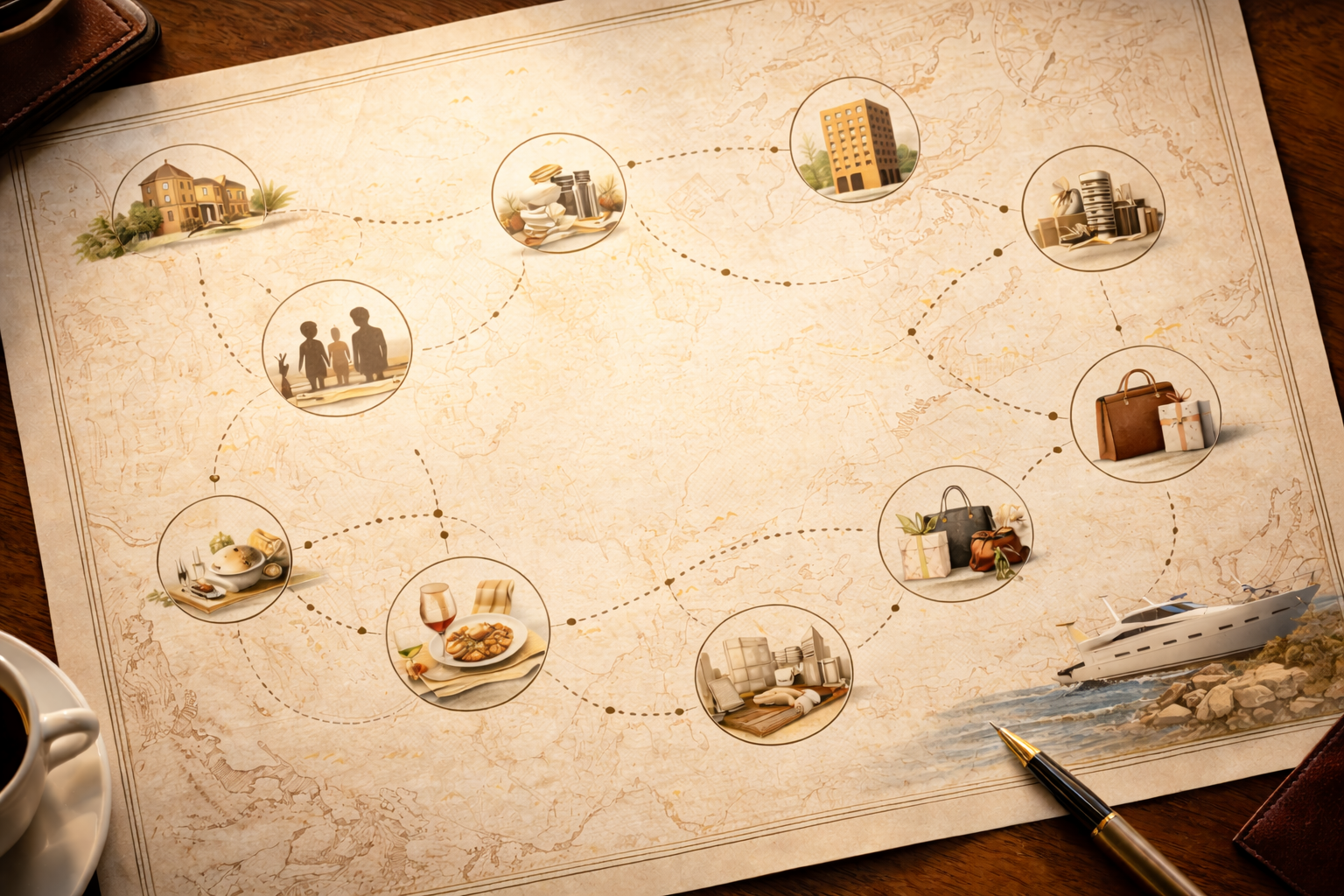
This engagement focuses on how organizations actively build, maintain, and deepen client relationships over time—moving beyond reactive service toward intentional, personalized engagement.
Participants explore client mapping, outreach strategy, relationship signals, and the disciplined use of insight to anticipate needs before they are expressed. The emphasis is on relevance, timing, and consistency—supported by systems, standards, and emerging tools, including AI.
This engagement strengthens:
Clienteling and personalized outreach
Relationship mapping and intelligence gathering
Retention-driven engagement strategies
Transition from transactional to relational service models
The goal is not more communication.
It is more meaningful connection.
Big ideas, real impact.
“Clients are more likely to remain loyal when
they feel personally recognized rather than
merely satisfied.”
(Harvard Business Review, relationship-based
loyalty research)
“Increasing customer retention rates by just 5%
can increase profits by 25% to 95%.”
(Bain & Company)
Boutique Legal Firm (10-Person Practice)
Context:
Founder-led, UHNW-facing boutique law firm with strong technical expertise and inconsistent client-facing confidence at first contact.
Engagement:
Full-day Art of the First Impression session with partners and client-facing staff. (November 2025)
Observed Outcomes (within 30–60 days):
Front-of-house interactions standardized across all staff
Noticeable increase in client confidence during initial consultations
Reduced reliance on partners to “reset” client perception after first meetings
Internal clarity around tone, presence, and early-stage communication
Representative Signals:
Client onboarding conversations shortened by ~15–20%
Improved conversion consistency across team members
Increased partner confidence delegating initial client interactions
Luxury Hotel Front Office Team (27 Employees)
Context:
Five-Star luxury property with strong service culture but variability in guest arrival experience depending on shift and individual staff.
Engagement:
Full-day immersion focused on arrival moments, non-verbal cues, and composure under pressure. (October 2025)
Observed Outcomes:
Arrival experience calibrated across all shifts
Increased confidence among newer team members
Reduced variability during peak arrival windows
Representative Signals:
Guest satisfaction scores related to arrival and welcome improved by ~8–12%
Fewer guest complaints tied to “tone” or “first interaction”
Improved internal confidence among junior front office staff
Convention & Visitors Bureau (Team of ~50)
Context:
Public-facing organization representing a major destination with inconsistent first-touch experiences across departments and events.
Engagement:
Two half-day workshops delivered across teams interacting with stakeholders, partners, and visitors. (June 2025)
Observed Outcomes:
Shared behavioral standards established across departments
Improved confidence and composure during high-volume public engagements
Greater alignment between brand positioning and in-person presence
Representative Signals:
Reduced escalation to senior leadership during events
Improved internal feedback scores on preparedness and professionalism
Greater consistency across staff representing the organization externally
Professional Services Firm (Client-Facing Team of ~30)
Context:
High-performing advisory firm with strong outcomes but inconsistent early-stage presence during pitches and first meetings. (September 2025_
Engagement:
Half-day workshop followed by observation and reinforcement during live client interactions.
Observed Outcomes:
Greater composure and clarity during first meetings
Reduced over-explaining and defensive communication
Stronger perceived authority earlier in client relationships
Representative Signals:
Higher close rates following initial meetings
Improved internal confidence during client presentations
More consistent feedback across senior and junior team members